
Radiofrequency Turbinate Reduction — Ankara
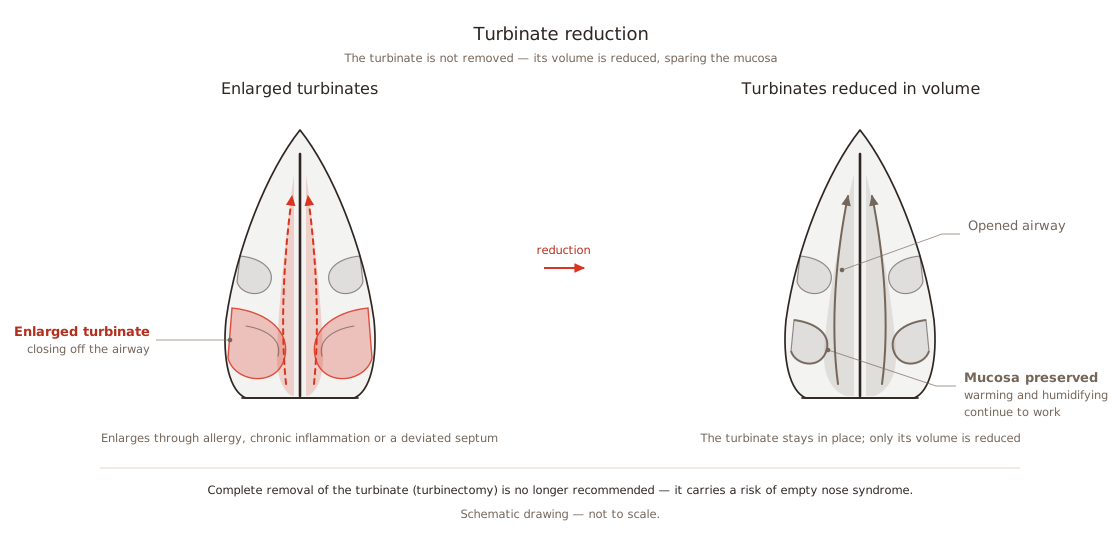
Reducing enlarged turbinates with radiofrequency energy, usually under local anaesthesia and in a short session. The aim is not to remove the turbinates but to reduce their volume enough to open the airway.
What the turbinates are and why they enlarge
The turbinates are structures on the side wall of the nose, covered in mucosa. They humidify, warm and filter the air you breathe. They have a job to do, which is why removing them entirely is not appropriate.
Allergic rhinitis, long-standing inflammation and, in particular, uncontrolled use of decongestant nasal sprays can enlarge the turbinates permanently. An enlarged turbinate narrows the airway, so the patient uses more spray. This cycle is the most common cause of spray dependence.
Who it may suit
- Nasal obstruction that persists despite medical treatment
- Years of nasal spray use, and being unable to sleep without it
- Obstruction that is worse at night and changes with the side you lie on
- Persistent turbinate enlargement alongside allergic rhinitis
- Patients planned for septoplasty who also have enlarged turbinates
How it is performed
The inside of the nose is first numbed with local anaesthetic. A radiofrequency probe is placed inside the turbinate and produces a controlled reduction in the tissue beneath, while the mucosal surface is preserved. Because the surface is preserved, the turbinate largely keeps its humidifying function.
Packing is generally not needed afterwards. Most patients go home the same day and return to normal life the next.
In patients scheduled for septoplasty, this can be done in the same session.
What to expect
In the first days the lining is swollen, so the blockage can temporarily feel worse. Clear relief is usually described within two to four weeks.
If ongoing allergy underlies the enlargement, the procedure alone may not be a lasting solution and allergy treatment needs to continue. Some patients see regrowth over the years, and the procedure can be repeated.
Recovery
- First 3 days The lining is swollen and the blockage may temporarily increase. Saline spray is recommended.
- Week 1 Crusting phase. Do not pick at the nose or remove crusts by force.
- Weeks 2 to 4 Crusting settles and breathing begins to open up clearly.
- Months 2 to 3 The result settles. Whether the need for spray has reduced is assessed at this point.
These are average times; recovery varies from person to person.
Written and medically reviewed by
Ear, Nose and Throat Surgeon · Last reviewed:
Frequently asked questions
Is it painful?
The procedure is done under local anaesthesia. Patients generally describe a sensation of pressure. Pain afterwards is not expected; a simple analgesic is enough if needed.
Are the turbinates removed completely?
No. Because they humidify and warm the air, removing them entirely is not appropriate and can cause lasting dryness and discomfort. The aim is measured reduction.
Can I stop using nasal spray?
That is the aim in most patients. However, the answer to spray dependence is not the procedure alone; the withdrawal process should be managed by a doctor.
Can they enlarge again?
If underlying allergy continues, regrowth can occur over the years. The procedure can be repeated where needed.
Can it be combined with septoplasty?
Yes, this is a common combination. Even with a straightened septum, large turbinates can maintain the obstruction, so the two are assessed together.
Book a consultation
Let us establish the source of your complaint together, through examination and endoscopic assessment.