Septorhinoplasty in Ankara
Straightening the septum and reshaping the outside of the nose in a single operation: one anaesthetic, one recovery. For most patients who have both a breathing complaint and a concern about shape, this is the approach that fits.
What septorhinoplasty is
The name combines two operations: septoplasty straightens the partition inside the nose, and rhinoplasty reshapes the outside. They can be done separately, but in most patients the same structures affect both breathing and appearance, so they are addressed together.
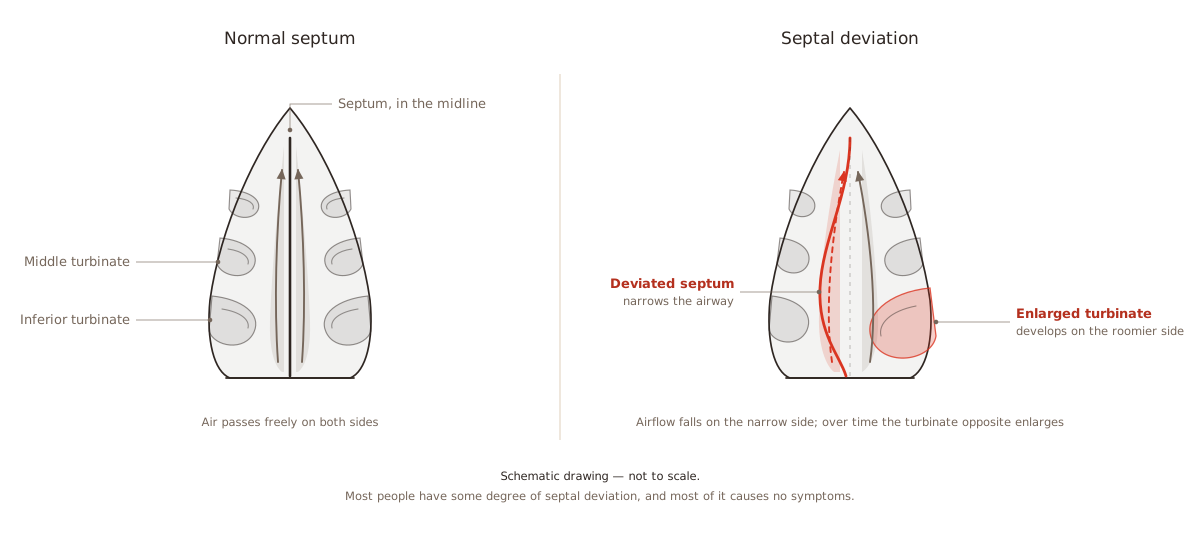
In practice this matters. A deviated septum can make the nose look crooked from the outside. Correcting only the outside leaves the internal deviation to pull the shape back over time. Correcting only the inside leaves the appearance unchanged.
Who it may suit
Septorhinoplasty is considered when these appear together:
- Difficulty breathing through one or both nostrils
- Sleeping with the mouth open, waking with a dry mouth
- A nose that looks deviated or asymmetric
- A dorsal hump alongside obstruction
- Change in both shape and breathing after an injury
- Growing reliance on decongestant nasal sprays
How it is performed
The operation usually begins with the septum. Deviated portions are removed or straightened in place. The cartilage that is removed is not discarded: it is used as graft material to strengthen tip support or open the nasal valve. The septum is therefore both the source of the problem and the material for the solution.
If the turbinates are enlarged they can be reduced in the same session. The aim here is measured reduction rather than removal, because the turbinates humidify and warm the air, and removing too much can cause lasting dryness and discomfort.
The external shape is then addressed: the dorsum is adjusted, osteotomies are used if the bones need narrowing, and the tip is shaped with sutures and grafts. A splint and, usually, thin internal silicone splints are placed at the end.
Why one operation rather than two
A single session means one anaesthetic and one recovery period instead of two. Cartilage taken from the septum can also be used as graft material in the same operation, which may avoid the need for a second donor site such as the ear or rib.
Operations performed for a functional reason and those performed purely for appearance are assessed differently for reimbursement. Which category your case falls into becomes clear after examination and the necessary investigations.
What can be changed, and what cannot
Explaining what an operation can achieve is easy. Stating its limits is done less often, but it is the only way to set expectations correctly. What follows are limits set by tissue, not by technique.
- Skin thickness. In thicker skin, fine detail at the tip shows less from the outside and swelling lasts longer. In thin skin, any irregularity underneath can become visible over time. Skin thickness cannot be changed; the operation is planned around it.
- Cartilage reserve. Where support is needed, grafts are used, and cartilage is taken from the septum first. In a nose that has been operated on before, that reserve may be depleted; ear or rib cartilage then comes into consideration.
- Facial proportions. The nose is not seen on its own but together with the chin, forehead and the midline of the face. A nose that does not suit the rest of the face will not sit right, even if it is "correct" in isolation.
- The biology of healing. How scar tissue will behave cannot be known in advance. The same technique can give different results in two people, and the result takes twelve months to settle.
- Breathing comes before appearance. An aesthetic request that would narrow the nasal valve damages the result in both respects. Such a request is declined, with the reason explained.
These limits are discussed one by one at the consultation. A target such as "that celebrity's nose" is not a realistic plan, because the same shape on different skin and a different skeleton does not give the same result.
Recovery
- First 48 hours The inside of the nose is swollen, so breathing is through the mouth. Swelling and bruising are at their most obvious.
- Week 1 The splint and internal silicone splints are usually removed this week. Most patients describe a clear improvement in breathing once the splints are out.
- Weeks 2 to 4 Crusting inside the nose settles. Saline spray is recommended for cleaning. Most patients return to social life.
- Months 2 to 3 Breathing largely settles. The coarse swelling on the outside resolves.
- Months 6 to 12 Swelling resolves fully and the nose takes its final shape. Follow-up continues through this period.
These are average times; recovery varies from person to person.
Written and medically reviewed by
Ear, Nose and Throat Surgeon · Last reviewed:
Frequently asked questions
How is this different from septoplasty?
Septoplasty only straightens the partition inside the nose and does not change the external appearance. Septorhinoplasty also reshapes the outline of the nose.
Will my breathing really improve?
If the obstruction comes from septal deviation, enlarged turbinates or a narrow nasal valve, clear improvement is expected. If it comes from allergy or sinus disease, surgery alone is not enough and medical treatment continues. That distinction is made at the examination.
Will packing be used?
The older type of packing that hurt on removal has largely been abandoned. Thin silicone splints with an airway through them are now generally preferred. Whether they are used depends on what is done.
How much will my nose change?
That is up to you. Some patients want only the deviation corrected and prefer their appearance largely preserved. Others want a clear change. The plan is made together at the examination.
I am travelling from abroad. How long should I stay?
Usually a few days before surgery for examination and tests, and about a week afterwards for the first check and splint removal. Please discuss this before booking travel.
When can I exercise?
Light activity such as walking is usually allowed early. Weight training, running and especially contact sports require a considerably longer wait, set according to the extent of your operation.
Can breathing and appearance be corrected in the same operation?
In suitable cases, yes. Septal deviation and turbinate enlargement can usually be addressed together with the external shape in one session. Suitability is determined after endoscopic examination.
Book a consultation
Let us establish the source of your complaint together, through examination and endoscopic assessment.