
Snoring and Sleep Apnoea — Ankara
Snoring is a sound rather than a disease. What matters is whether breathing actually stops behind that sound. Assessment starts with examination and endoscopy and continues, where needed, with a sleep study. Treatment is planned only once the level of obstruction is known.
Why snoring happens
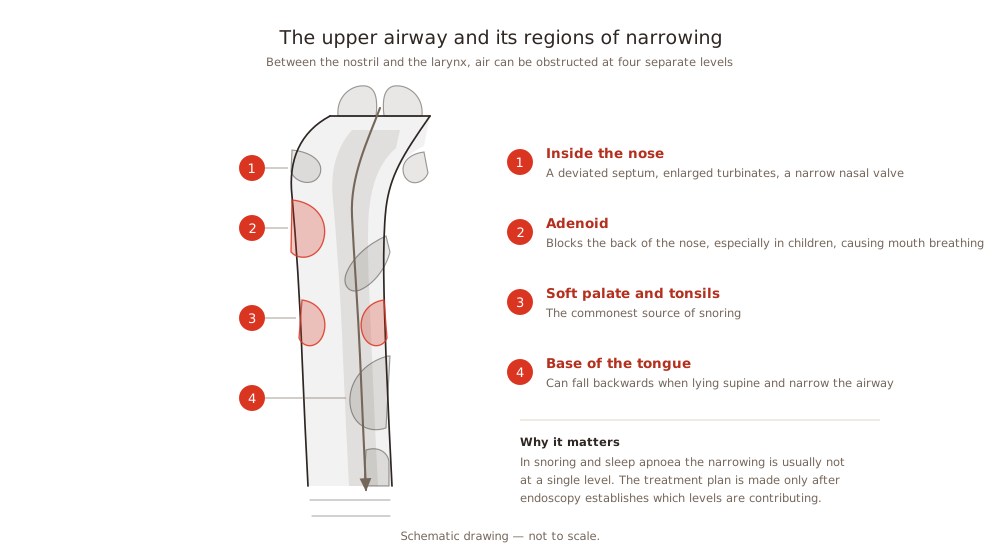
During sleep the muscles of the airway relax. As air passes, soft tissue vibrates and produces sound. The source may be the nose, the postnasal space, the palate, the tonsils or the base of the tongue. Treatment given without finding the source usually fails.
If the obstruction does not merely vibrate but interrupts airflow, the picture becomes obstructive sleep apnoea: short pauses in breathing repeating throughout the night.
Why sleep apnoea matters
Untreated sleep apnoea does more than cause daytime sleepiness. It has been linked with high blood pressure, cardiac arrhythmias and metabolic problems, and reported to increase the risk of road traffic accidents.
For that reason even "my partner snores and it disturbs me" deserves attention: the sound is sometimes the only visible sign.
Which symptoms call for a sleep study
- Pauses in breathing during sleep, noticed by someone else
- Waking at night choking or gasping
- Waking unrefreshed despite enough hours of sleep
- Marked daytime sleepiness, dozing at the wheel
- Morning headache and dry mouth
- Frequently getting up to pass urine at night
- Problems with attention and memory
Where these are present, polysomnography is requested. The study measures how many breathing pauses occur through the night and how long they last. Treatment decisions follow that measurement.
Treatment options
Treatment is not a single method; it is chosen according to the level of obstruction and the severity of the apnoea.
Where obstruction comes from the nose, septoplasty and turbinate reduction do not treat apnoea on their own; their contribution is to relieve nasal obstruction and improve tolerance of device therapy. Where the tonsils and adenoids are large, particularly in children, removing them is a common and effective solution. Palatal surgery is considered for laxity at that level.
In moderate and severe sleep apnoea the gold standard treatment is a positive airway pressure device used at night. Surgery does not replace it, but by relieving nasal obstruction it can markedly improve tolerance of the device.
Weight loss, avoiding sleeping on the back, and avoiding alcohol before bed are part of the treatment rather than optional extras.

Recovery
- First consultation Examination, endoscopic assessment and detailed history.
- Weeks 1 to 3 A sleep study is arranged if indicated, and the result reviewed together.
- Treatment decision Surgery, device therapy or both are planned according to the level of obstruction and the study result.
- 1 to 2 weeks after surgery Recovery varies with the procedure. Throat surgery brings pain on swallowing.
- Month 3 Review. The sleep study may be repeated to measure whether treatment has been sufficient.
These are average times; recovery varies from person to person.
Written and medically reviewed by
Ear, Nose and Throat Surgeon · Last reviewed:
Frequently asked questions
I snore but have no apnoea. Do I still need treatment?
Simple snoring is not as risky as apnoea, but it still affects sleep quality and the people you live with. Where the source is the nose, treatment is often relatively straightforward.
How is a sleep study done?
Breathing, oxygen levels and sleep stages are recorded through the night, either in a sleep laboratory or, in suitable cases, at home.
If I have surgery, can I stop using the device?
That depends on the severity of the apnoea and the level of obstruction. In mild cases surgery alone may be sufficient. In moderate and severe cases the main contribution of surgery is usually making the device easier to tolerate.
My child snores. Is that normal?
Regular snoring in a child is not considered normal. The most common cause is enlarged adenoids and tonsils. It should be assessed; sleep apnoea in children can affect growth and attention.
Does losing weight really help?
Yes. Fatty tissue around the neck and tongue base narrows the airway. Weight loss can measurably reduce the severity of apnoea.
Book a consultation
Let us establish the source of your complaint together, through examination and endoscopic assessment.