
Adenoid and Tonsil Surgery — Ankara
Adenoids and tonsils are part of the immune system, and enlargement does not always call for surgery. The decision rests on how much they affect a child's breathing, sleep, hearing and growth.
What they are
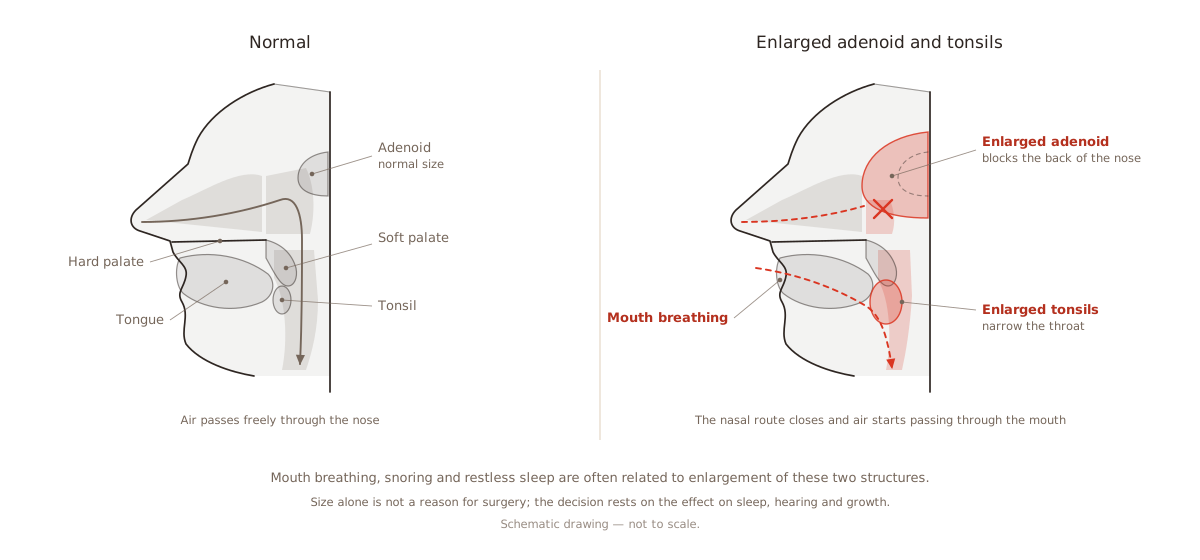
Both are lymphoid tissue and contribute to immune function in childhood. The adenoid sits at the roof of the postnasal space, behind the nose, and cannot be seen from outside; the tonsils sit on either side of the throat.
Some enlargement is normal in children and they usually shrink with age. The problem begins when enlargement narrows the airway or becomes a source of recurrent infection.
Which signs matter
- Sleeping with the mouth open and snoring regularly
- Pauses in breathing during sleep, restless sleep, night sweating
- Waking tired, with problems of attention or behaviour during the day
- Nasal-sounding speech
- Recurrent middle ear infection or fluid behind the eardrum
- Reduced hearing, or slow responses to being called
- Many episodes of tonsillitis in a year
- Difficulty feeding and gaining weight
The sleep-related items deserve the most attention. Sleep apnoea in children can interrupt the phase of sleep in which growth hormone is released, and can show in school performance.
How it is assessed
Because the adenoid cannot be seen from outside, assessment is done with a flexible endoscope. The procedure takes a few seconds and most children tolerate it. This avoids both unnecessary surgery and unnecessary waiting.
Where hearing is affected, a hearing test and tympanometry to detect fluid behind the eardrum are performed. If breathing pauses are described, a sleep study may be considered.
When surgery is needed
For adenoids the most common reasons are breathing difficulty during sleep and recurrent middle ear problems. For tonsils there are two separate reasons: frequently recurring infections, or size sufficient to obstruct breathing during sleep.
Removing both together is common but not obligatory. In some children only the adenoid is removed and the tonsils are left.
Parents often worry that surgery will weaken immunity. Lymphoid tissue in the body is not limited to these two sites, and removing them has not been shown to weaken the immune system permanently.
Recovery
- Day of surgery Performed through the mouth under general anaesthesia. There is no external incision. The child is up and about the same day.
- First 3 days If the tonsils were removed, pain on swallowing is marked. Cold, soft food and plenty of fluids are recommended, with regular pain relief.
- Days 4 to 7 A white layer forms over the healing area in the throat. This is normal healing rather than infection. Breath may smell.
- Weeks 1 to 2 Pain settles and eating returns to normal. Strenuous activity is avoided because of the risk of late bleeding.
- Month 1 Review. Changes in sleep pattern and snoring are assessed.
These are average times; recovery varies from person to person.
Written and medically reviewed by
Ear, Nose and Throat Surgeon · Last reviewed:
Frequently asked questions
Can adenoids grow back?
Rarely, particularly in children operated on at a young age, some regrowth can occur. If symptoms return, endoscopic assessment is repeated.
Will my child get ill more often without tonsils?
No. Immune tissue is not limited to the tonsils, and permanent weakening of immunity after surgery has not been demonstrated. In children with frequent infections the number of episodes usually falls.
Is there a minimum age?
There is no fixed lower limit; the decision follows the severity of symptoms. Where there is marked breathing difficulty during sleep, surgery can be performed at a young age.
What can my child eat afterwards?
Cold, soft food in the first days. Avoid hot, hard, spicy and acidic food. Plenty of fluids helps healing.
Is there a risk of bleeding?
Late bleeding can occur after tonsil surgery, usually within the first ten days, which is why strenuous activity is avoided. If fresh blood appears from the mouth, seek help without delay.
Book a consultation
Let us establish the source of your complaint together, through examination and endoscopic assessment.