
Dizziness and Vertigo — Ankara
Dizziness is not one disease but a symptom shared by many causes. From an ENT point of view the task is to tell whether it arises in the inner ear, because some of those conditions can be resolved with manoeuvres performed in clinic.
First distinction: spinning or light-headedness?
What patients call dizziness covers very different pictures. A sense that the surroundings or the self are spinning (vertigo) usually involves the balance system. Feeling faint or about to black out is more often related to blood pressure or the heart. A constant sense of unsteadiness points elsewhere again.
Because this distinction changes treatment directly, it is asked about in detail at the first consultation: how long the episodes last, what starts them, and whether any ear symptoms accompany them.
Common inner ear causes
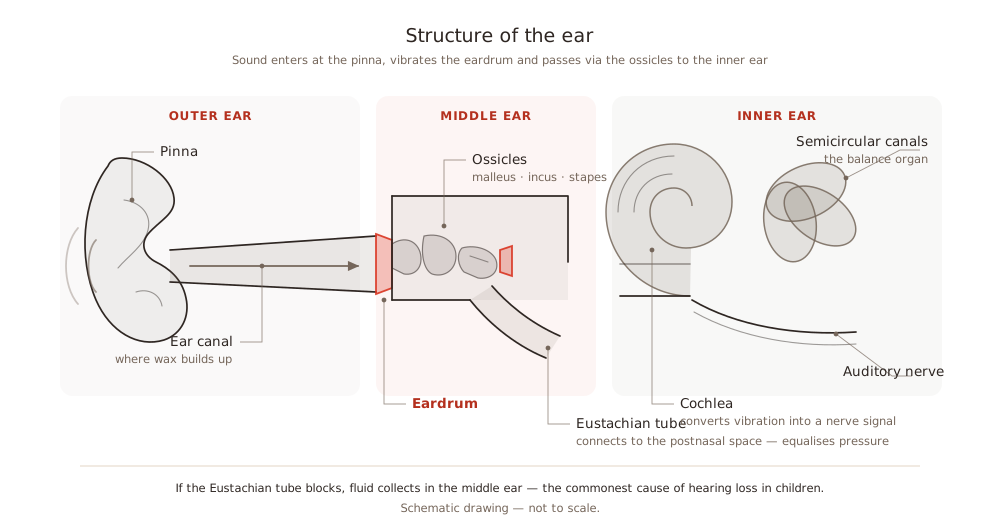
Intense spinning lasting seconds, brought on by a change in head position such as lying down or sitting up, is usually BPPV. It arises from small particles displaced into the balance canals of the inner ear, and once correctly diagnosed the treatment is generally a repositioning manoeuvre performed during the examination.
Attacks lasting minutes to hours, with tinnitus, fullness and fluctuating hearing loss, suggest Meniere's disease. Treatment begins with dietary adjustment and medication.
Severe dizziness lasting several days, often after a viral illness, may be vestibular neuritis. Balance exercises are the main part of recovery in that picture.
When to seek help without delay
- Dizziness with slurred speech, double vision or weakness in the face or arm
- An accompanying severe and unfamiliar headache
- Sudden hearing loss in one ear
- Loss of balance severe enough to prevent walking
- Any change in consciousness
These can point to causes outside the inner ear that need emergency assessment. In that situation go to the nearest emergency department.
How it is assessed
A detailed history is more decisive here than any test: the duration of the episode, its trigger and any accompanying ear symptoms give most of the diagnosis.
Examination looks at eye movements and balance. Where BPPV is suspected, diagnostic positioning manoeuvres are performed, and if the diagnosis is confirmed a treatment manoeuvre can follow in the same session. Audiometry is requested to assess hearing as well.
Recovery
- First visit Detailed history, examination of balance and eye movements, hearing test.
- Same session If BPPV is confirmed, a repositioning manoeuvre is performed. Many patients notice clear relief the same day.
- Weeks 1 to 2 Review. If symptoms persist the manoeuvre may be repeated or the diagnosis reconsidered.
- Months 1 to 3 Follow-up with balance exercises in vestibular neuritis and persistent balance complaints.
These are average times; recovery varies from person to person.
Written and medically reviewed by
Ear, Nose and Throat Surgeon · Last reviewed:
Frequently asked questions
Are displaced crystals a real diagnosis?
The condition commonly described that way is BPPV, and it is a defined disorder arising from particles displaced into the balance canals of the inner ear. It can be treated with an appropriate manoeuvre.
Should I take medication for dizziness?
Vestibular suppressants can help in the acute phase, but used for long periods they delay the brain's own adaptation. The duration should be set by a doctor.
Can it come back?
BPPV recurs in some patients, and the manoeuvre is then repeated. In Meniere's disease attacks follow a fluctuating course and treatment aims to make them less frequent.
I have a neck problem. Could that be the cause?
Dizziness attributed to the neck is a contested topic. Inner ear and central causes should be excluded first in any patient with dizziness.
Book a consultation
Let us establish the source of your complaint together, through examination and endoscopic assessment.